
 sales@sihio.com
 English
 Español
 Portugues
 Pусский
 Tiếng Việt

Gasless Wire Feed Welding
Gasless Wire Feed Welding: A Comprehensive Overview Gasless wire feed welding, also known as self-shielded flux-cored arc welding (FCAW-S), is a versatile and efficient welding process widely used in construction, fabrication, and repair work. Unlike traditional MIG welding, which requires an external shielding gas, gasless welding relies on a flux-cored wire that generates its own protective gas when heated. This eliminates the need for gas cylinders, making the process more portable and suitable for outdoor applications where wind or environmental conditions might disperse shielding gas. How It Works The gasless welding process uses a continuously fed consumable electrode wire with a flux core. When the wire is energized and contacts the workpiece, an electric arc forms, melting both the wire and the base metal. The heat decomposes the flux core, releasing shielding gases and forming a slag layer that protects the molten weld pool from atmospheric contamination (e.g., oxygen and nitrogen). The slag must be chipped off after welding. Advantages 1. Portability & Convenience – No gas cylinders or regulators are needed, making it ideal for fieldwork or remote locations. 2. Wind Resistance – Unlike gas-shielded processes, gasless welding performs well in breezy conditions. 3. Higher Deposition Rates – Flux-cored wires often allow faster welding compared to solid MIG wires. 4. Deep Penetration – The process provides strong weld penetration, making it suitable for thicker materials. 5. Versatility – Works well on rusty, painted, or dirty metals, though surface preparation still improves results. Limitations 1. Slag Removal – Post-weld cleaning is required to remove the slag layer. 2. Spatter – Produces more spatter than gas-shielded welding, requiring additional cleanup. 3. Fumes – The flux generates more smoke, necessitating proper ventilation or a respirator. 4. Wire Quality Sensitivity – Low-quality flux-cored wire can lead to porosity or inconsistent welds. Applications Gasless wire feed welding is commonly used in: - Structural steelwork (e.g., beams, frames) - Shipbuilding and pipeline repairs - Agricultural equipment maintenance - Heavy machinery fabrication Best Practices - Use a drag (pull) technique for better control. - Maintain proper wire feed speed and voltage settings. - Store flux-cored wire in a dry environment to prevent moisture absorption. Conclusion Gasless wire feed welding offers a practical solution for outdoor and high-productivity welding tasks. While it has some drawbacks, its portability, wind resistance, and strong penetration make it a preferred choice for many industrial and repair applications. Proper technique and equipment setup are key to achieving high-quality welds.
نتاج
تصنيف:
-
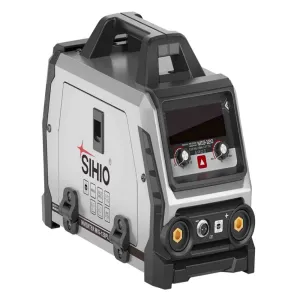
ماكينة لحام تغذية الأسلاك بدون غاز
تصنيفها: ماكينة لحام MIGالمشاهدات: 3901عدد:وقت الإصدار: 2025-09-22 20:48:14MIG120/140 بلس -
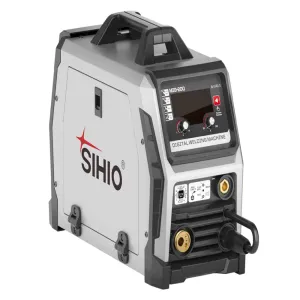
ماكينة لحام تغذية الأسلاك بدون غاز
تصنيفها: ماكينة لحام MIGالمشاهدات: 2176عدد:وقت الإصدار: 2025-09-25 19:08:01ميغ-160/180/200 -
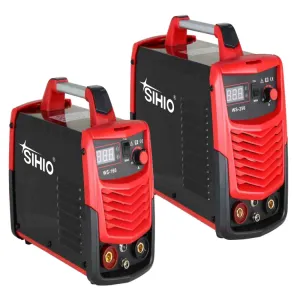
ماكينة لحام كهربائية TlG
تصنيفها: ماكينة لحام TIGالمشاهدات: 881عدد:وقت الإصدار: 2025-10-09 14:07:17وس-160T/180T/200T/250T
أخبار
تصنيف:
لا توجد نتائج بحث!
حالة
تصنيف:
لا توجد نتائج بحث!
فيديو
تصنيف:
لا توجد نتائج بحث!
تحميل
تصنيف:
لا توجد نتائج بحث!
تجنيد
تصنيف:
لا توجد نتائج بحث!
المنتجات الموصى بها
-
NEWS
ماكينة لحام تغذية الأسلاك بدون غاز
مزيد من المعلومات



 هاتف