
Choose a plasma cutting machine by the thickness of steel you cut cleanly every week, not by the severance number on the box. A 60 A machine is rated to sever roughly 1 inch of mild steel, but its quality-cut capacity - the thickness at which the edge is square, the dross brushes off and the part is usable - is closer to 5/8 inch. Insist on a pilot arc torch rather than high-frequency start, because it cuts painted, rusty and expanded metal and it does not interfere with CNC controls. Then budget the system, not the box: the compressed air supply, its filtration and the electrode and nozzle stream will cost more over three years than the machine itself. Most complaints blamed on the cutter - wandering arcs, heavy dross and consumables dying overnight - trace back to wet or oily air, a bad ground clamp or worn consumables rather than to the power source.
If you remember one sentence: buy cut quality at your working thickness, and treat clean dry air as part of the machine specification.
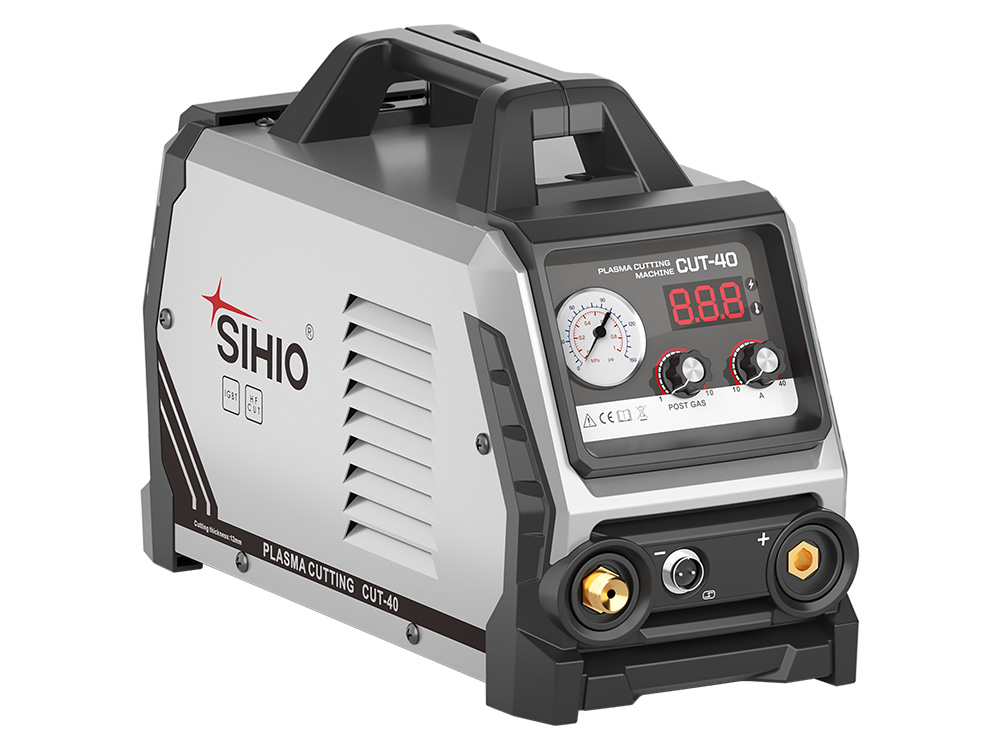
Read any welding forum thread about plasma cutters and the same story repeats: someone bought a machine advertised as cutting half-inch steel, then spent an afternoon fighting a wandering arc, a beveled edge and a dross beard that needed a grinder to remove. The machine was not necessarily defective. The rating on the box was describing a different event than the buyer was picturing.
Manufacturers quote two different thickness numbers. Clean cut capacity is the thickness at which the machine produces a usable edge at a reasonable travel speed. Severance is the absolute maximum thickness the arc can push through, slowly, with a heavily beveled edge and slag on the underside. A 40 A machine may list 16 mm severance while its honest clean-cut number is around 10 mm. Brochures lead with the bigger figure, and buyers assume both describe the same thing.
Starting a cut inside a plate rather than at its edge takes far more arc power. A machine that slices through 12 mm plate in a continuous cut may only pierce 6 mm reliably. If your work involves cutting holes and internal profiles rather than trimming edges, this single number decides whether the machine can do the job at all.
A plasma cutter running on wet or oily compressed air will destroy an electrode and nozzle set within hours while producing cuts that look like they were chewed rather than cut. Very few spec sheets state air quality requirements prominently, and even fewer buyers install the filter-regulator-dryer chain that the machine actually needs. The result gets blamed on the cutter.
An electrode and nozzle set costs 15 to 25 USD and lasts between one and three hours of arc-on time, depending on amperage, air quality and how many times the arc is restarted. Two machines with the same purchase price can differ by a factor of two in consumable life because of torch design and gas swirl quality. That difference compounds faster than any feature on the front panel.
Start with a material audit, not a catalogue. Write down the three thicknesses you actually cut most often, in the metals you actually cut them in - mild steel, stainless or aluminium - and whether you pierce or only trim edges. That list, not the poster in the showroom, is your specification.
The conventional relationship between output amperage and mild steel capacity looks like this:
| Output class | Typical clean cut (mild steel) | Typical severance | Typical pierce | Realistic application |
|---|---|---|---|---|
| 30 to 40 A | Up to 6 to 10 mm | 12 to 16 mm | 3 to 5 mm | Sheet metal, ducting, automotive panel, signs, light repair |
| 50 to 60 A | 12 to 16 mm | 20 to 25 mm | 6 to 8 mm | General fabrication shops, structural sections, farm equipment |
| 80 to 100 A | 20 to 25 mm | 30 to 35 mm | 10 to 12 mm | Production cutting, thicker plate, repeated pierce work |
| 120 to 200 A | 32 to 50 mm | 40 mm and above | 16 mm and above | Heavy plate, bevel preparation, mechanized tables |
Three adjustments matter. Stainless cuts within roughly the same windows but rewards slightly slower travel speed and careful standoff, because its lower thermal conductivity concentrates heat and warps thin sheets. Aluminium cuts cleanly on compressed air at these ratings, though edges come out slightly rougher than on steel and specialised argon-hydrogen mixtures only become worthwhile on high-end mechanized systems. Expanded metal, mesh and painted or rusty plate all punish contact-start torches and reward pilot arc designs - which is the subject of the next step.
A practical sizing habit that saves regret: take the thickest material you cut monthly, add 25 percent headroom, and buy the class whose clean-cut column covers that number. A 60 A machine working every day at 60 percent of its maximum will outlast and out-cut a 40 A machine being flogged at its ceiling, for exactly the same reason a welder sized with headroom outperforms one bought at its limit.
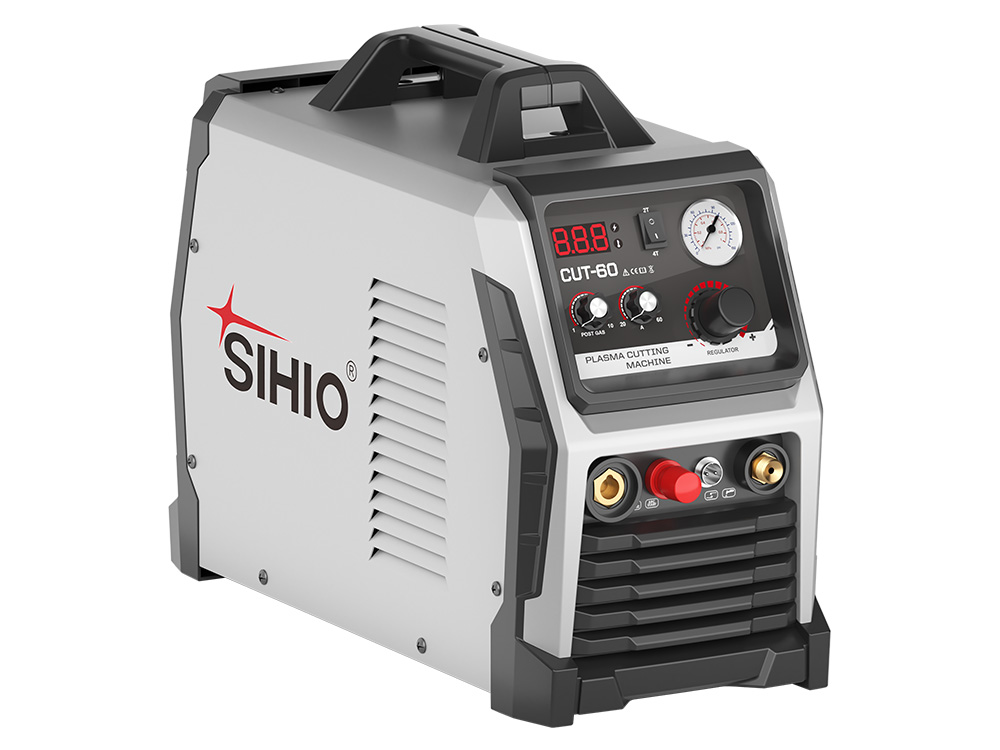
How the arc starts sounds like a technical footnote until the first week of ownership, when it determines what you can cut and how often you buy consumables. There are three systems in the current market.
| Start system | How it works | Strengths | Weaknesses |
|---|---|---|---|
| Contact start | Tip touches the work to strike the arc | Simple, cheap, safe | Needs clean bare metal; drags consumables; struggles on painted or rusty plate |
| High-frequency start | HF spark ionises the gap before the main arc | Starts without contact; proven design | Radiates electrical noise that interferes with computers, CNC controllers and nearby electronics |
| Pilot arc (blowback) | Small pilot arc forms inside the torch, then transfers to the work | Cuts painted, rusty, coated and expanded metal; longer consumable life; CNC-safe | Slightly higher torch cost; pilot arc time still consumes electrode life |
For hand cutting in a real workshop - material that is painted, mill-scaled, or half a meter of expanded mesh - a pilot arc torch is not a luxury feature, it is the difference between working and fighting. On the machine side, check whether the pilot arc is a MOSFET or IGBT inverter design with a stated pilot arc timeout, because holding the trigger in open air burns electrode life for no cutting done.
Drag cutting rests a shield cup on the work and guides the torch along by feel. It is the easiest technique to learn and it produces acceptable results on thin material. Standoff cutting holds the torch 3 to 5 mm above the work with a guide or roller, which improves edge squareness and consumable life on thicker plate. Machines that ship with both a drag shield and a standoff guide cover both worlds; ask what is in the box rather than assuming.
A torch lead that reaches the far side of the cutting table costs little at purchase time and removes daily frustration. Four to six metres suits most shops. More important long term: before buying any machine, check that electrodes, nozzles, swirl rings, shield cups and retaining caps for its torch are available from at least two suppliers in your market at sane prices. The most capable cutter becomes scrap metal the day its consumables go out of stock, and every experienced operator has a story about exactly that.
Compressed air is both the plasma and the cooling medium and the dross-blowing jet. Get it wrong and every other specification stops mattering. Yet the air requirement is the single most overlooked line in plasma cutter purchases.
Most inverter plasma cutters in the 40 to 100 A class want roughly 4 to 8 CFM of clean, dry, oil-free air at 60 to 90 psi - check the nameplate of the specific model, because running below spec is one of the two most common causes of unstable arcs. That requirement has direct consequences for compressor sizing:
| Air system element | What the machine actually needs | What goes wrong without it |
|---|---|---|
| Flow capacity | 4 to 8 CFM at the torch while firing (read the gauge during a cut, not statically) | Pressure sags mid-cut; arc weakens or drops out on long runs |
| Pressure | Stable 60 to 90 psi within the model tolerance band | Too low: arc lingers and wears the tip. Too high: turbulent arc, wide kerf |
| Water removal | Drained tank plus coalescing filter at the machine | Wet air pits electrodes, causes double arcing, destroys nozzle sets within hours |
| Oil removal | Oil-free compressor, or filter-regulator-lubricator minus the lubricator | Oil coats the nozzle and swirl ring; cut quality degrades permanently |
| Regulation | A regulator at the machine inlet, not only at the compressor | Shop line pressure swings translate directly into cut quality swings |
| Hose diameter and length | Adequate bore for the run; avoid drinking-straw fittings | Undersized hoses mimic an undersized compressor |
Two habits extend consumable life more than any premium torch. First, drain the compressor tank daily - accumulated condensate is what eventually arrives at the nozzle. Second, install the filter-regulator unit at the machine inlet rather than at the compressor, so the last metres of line act as a cooling and settling section. Workshops that share one airline between paint guns, pneumatic tools and the plasma cutter should treat filtration as mandatory rather than optional, because tool oil travels.
A note for field work: a small portable compressor rated at the machine flow requirement is workable but loud and slow to recover. If most of your cutting happens away from the shop, weigh a compressor upgrade against a dual-process strategy that keeps thick field cuts on oxy-fuel, which is exactly the trade the next step addresses.
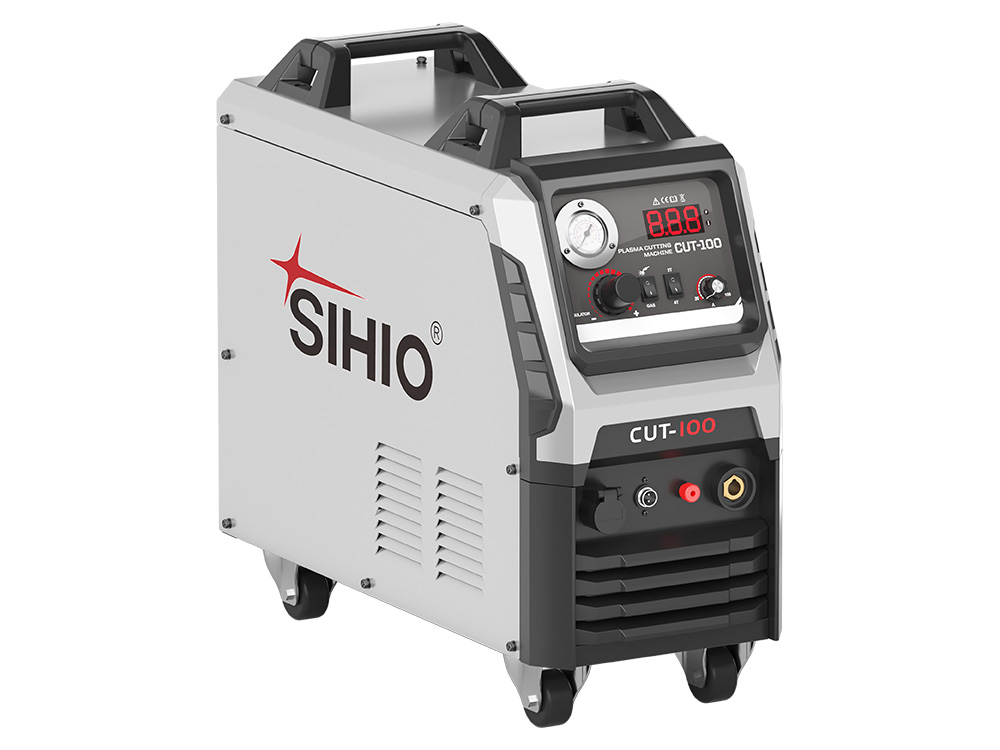
Plasma is the most versatile thermal cutting process, but it is not universally the cheapest or the most practical one. The decision is driven by material type, thickness band and where the work happens.
| Decision factor | Plasma cutting | Oxy-fuel cutting | Angle grinder with cutoff wheel |
|---|---|---|---|
| Materials | Any conductive metal: mild steel, stainless, aluminium, copper, brass | Carbon and low-alloy steel only | Steel and most metals, slowly |
| Best thickness band | Thin sheet to about 25 mm hand-held; 50 mm mechanized | Medium plate to unlimited thickness | Occasional thin straight cuts |
| Start time | Instant pilot arc | Preheat flame of 10 to 30 seconds per start | Instant but slow cutting |
| Edge quality | Narrow kerf, small heat-affected zone (0.25 to 0.8 mm), little distortion | Wider HAZ (1 to 2 mm), more slag, more distortion on thin plate | Heat-tinted edge, sparks everywhere |
| Running consumables | Electrode and nozzle sets on arc time | Oxygen and fuel gas cylinders, cutting tips | Cutoff wheels |
| Infrastructure needed | Electricity plus compressed air | Gas cylinders only - no power needed | Power only |
| Remote or outdoor work | Works with a generator and portable compressor | Excellent - cylinder portability is its home ground | Excellent |
| CNC automation | The standard process for CNC tables | Possible on dual-process gantries for thick plate | Not applicable |
The economics have a well-known crossover. Under roughly 25 mm of steel, plasma is usually cheaper per metre once labour is counted, because it starts instantly and moves faster. Above about an inch, oxy-fuel wins on consumable cost per metre and cutting-tip life measured in hundreds of hours. Above two inches, plasma becomes impractical for hand-held work entirely, which is why heavy-section yards stay on oxy-fuel and why dual-process gantry tables pair the two.
For non-ferrous work there is no contest: oxy-fuel cannot cut stainless or aluminium, and a grinder on curves is misery. Any shop whose work includes stainless sheet, aluminium plate or mixed metals effectively has its answer already.
The pragmatic conclusion for most general fabrication shops: plasma as the daily driver, oxy-fuel kept for very thick sections and for jobs beyond a generator lead, and a grinder always within reach for the final dressing that both thermal processes still need.
The purchase price of a plasma cutting machine is a down payment. The running cost is consumables plus air plus electricity, and the first item dominates.
| Consumable | Typical life | Typical cost | What kills it early |
|---|---|---|---|
| Electrode | 1 to 3 hours arc time, or a few hundred starts and pierces | Part of a 15 to 25 USD electrode-plus-nozzle set | Wet or oily air; excessive pilot arc time; piercing too low; running past the pit-depth limit |
| Nozzle (tip) | Wears as a pair with the electrode | Same set | Double arcing from standoff held too close; wrong amperage for the orifice; spatter buildup |
| Swirl ring | Several electrode changes | Low single-digit USD | Contamination; mixing brands within a torch family |
| Shield cup | Months in careful shops | Low single-digit USD | Dragging on rough plate; spatter accumulation; dropping the torch |
| Retaining cap | Long service item | Low double-digit USD | Cross-threading during hasty consumable changes |
Replace the electrode when its emitter pit reaches the depth limit stated in the torch manual - for common copper electrodes that is around one millimetre - or at the first hard start, wandering arc or dross increase that survives a check of speed, height and air. Replace it before it damages the nozzle, and replace electrode and nozzle together after any severe failure, because they wear as a set and mixing a fresh nozzle with a worn electrode reintroduces the original problem.
Reputable aftermarket consumables matched to a specific torch family can cost 40 to 60 percent less than original parts and run acceptably. The failure mode is buying parts that merely thread in: a mismatched internal geometry changes gas flow and arc stability, and the savings evaporate into rework. Whatever you buy, verify the supplier lists compatibility with your exact torch model and amperage, and test on scrap before production work.
A useful metric to track from week one: consumable cost per hour of arc-on time, not per week. It makes air quality problems, technique problems and torch quality differences visible in the only number that matters, and it lets you compare two machines honestly after a month of ownership.
Plasma cutters are less power-hungry than welders of equivalent capacity, but input supply still shapes what you can realistically do.
The 30 to 40 A class runs happily on standard 230 V household circuits in most markets, and many dual-voltage models accept 110 to 120 V as well at reduced capacity. The 60 A and above classes want a dedicated 230 V circuit, and 100 A plus machines increasingly expect higher input current - check the input amperage figure, not the output figure, before planning sockets. Machines intended for generator use should state a minimum generator size; inverter power sources prefer clean power and a marginal generator produces exactly the opposite.
Duty cycle on a plasma cutter follows the same ten-minute convention as welding machines, and cutting is closer to continuous arc-on than most welding is. A machine rated 60 percent at its maximum is comfortable on production cutting; one rated 35 percent at maximum will interrupt long profiles on thick plate. Ask for the duty cycle at the amperage you will actually cut at, and treat thermal cut-outs mid-cut as both a quality problem - the restarts scar the edge - and a schedule problem.
On portability: a modern inverter plasma cutter in the 50 A class weighs between 10 and 20 kg, which is a genuine one-hand-or-two carry between bench, vehicle and site. The complete cutting kit - cutter, torch, ground lead, filter-regulator and hose - is lighter than a full oxy-fuel cylinder set, provided power and air exist where you are going. That asymmetry, power versus cylinders, is the real portability decision, and it was covered in Step 4.
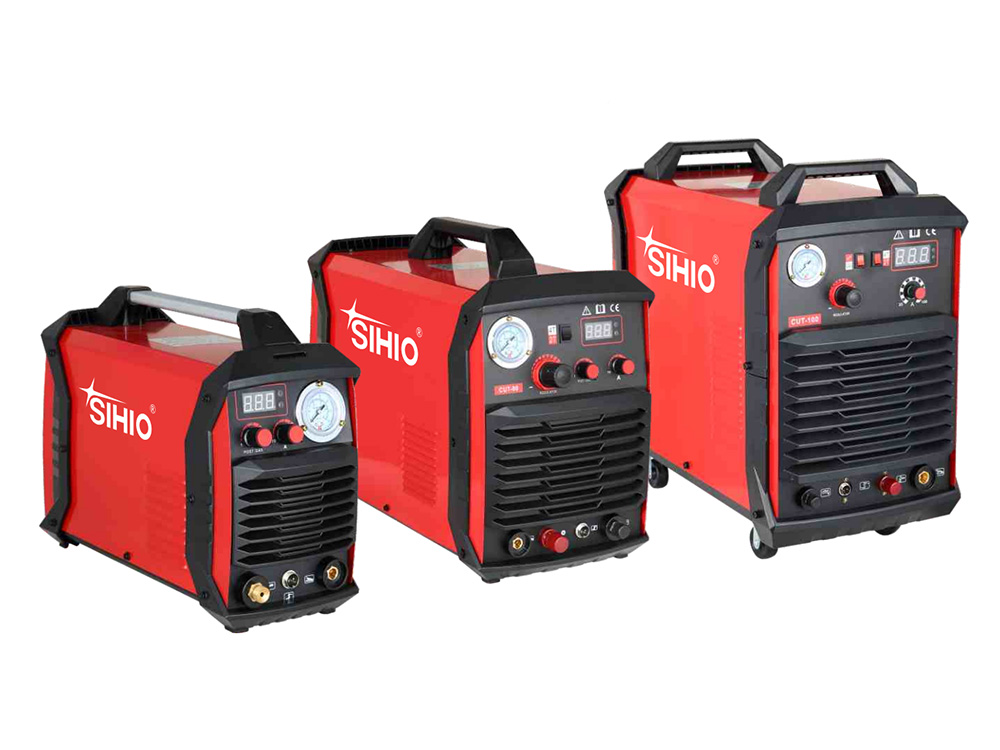
A large share of hand-cutting buyers add a CNC plasma table within two or three years, and the machines that transition cleanly are the ones specified with three features from day one.
A machine interface port (divided low-voltage start signal, commonly called a CPC or machine connector). Without it, the table cannot fire the torch under program control, and retrofitting is uglier than it sounds.
A mechanized-rated torch and lead, because hand torches have guards and triggers that tables do not want, and cable flexibility differs.
Consistent arc voltage output for torch height control. Height control regulates standoff by sampling arc voltage, and a machine whose voltage wanders with line conditions makes THC tuning impossible - a weakness where cheap machines are quietly exposed.
High-frequency start machines belong to the pre-CNC era: the HF burst radiates into table wiring and controllers, which is why every serious table installation standardised on pilot arc blowback start years ago. If there is any chance a cutting table is in your future, that single requirement should be non-negotiable in the hand machine you buy today.
Also verify the published cut chart: amperage, speed, standoff and nozzle combination for each thickness. On a table, that chart becomes your feed-rate library, and a manufacturer whose numbers do not match reality - a complaint that recurs on forums about budget machines - transfers directly into scrapped parts and wasted plate.
A plasma cutting machine carries an open-circuit voltage high enough to be genuinely dangerous, produces intense UV and ozone, and is an electromagnetic emitter. Certification is how you verify the manufacturer took those seriously. Ask for the following, and treat hesitation as a finding:
ISO 9001 certification in the name of the manufacturing entity, with a scope that covers the product you are buying - verified in the issuing registrar database.
CE declaration of conformity naming the harmonised standards and the exact model range, not a decorative logo on the nameplate.
IEC 60974-1 and IEC 60974-2 or equivalent type test reports covering duty cycle and thermal performance for the specific model.
EMC test results appropriate to your market, since inverter plasma sources radiate more than welding machines.
RoHS and REACH documentation where your import rules require it.
Country-specific approvals for your destination market, and the plug and labelling variants available for it.
An English service manual with an exploded torch parts diagram and consumable cross-reference, plus declared availability of the wearing parts.
Two document checks specific to plasma: ask for the cut chart data behind the advertised clean-cut figures, and ask for the specified air pressure and flow tolerance in writing. Suppliers who actually engineer the product have both on file and send them same-day.

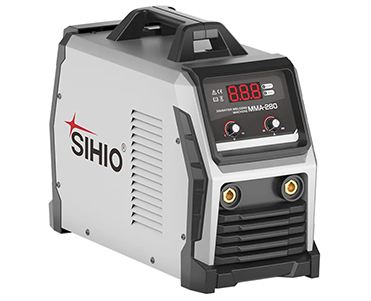
Roughly eighty percent of plasma cutting complaints resolve into three root causes: a bad ground, contaminated air or worn consumables. Diagnose symptoms in order before adjusting anything expensive.
| Symptom | Most likely cause | Fix |
|---|---|---|
| No arc at all | Ground clamp not on clean bare metal; trigger or solenoid fault; worn electrode | Grind a clean clamp spot; test the trigger while listening for the gas solenoid; inspect the electrode pit |
| Pilot arc fires but will not transfer | Poor work ground; nozzle too far from the work; air pressure below spec | Re-clamp to bare metal; check standoff; read the gauge during firing |
| Arc sputters or sounds rough | Moisture or oil in the airline; partially clogged nozzle | Drain the tank; service filters; replace the nozzle set |
| Heavy dross underneath the cut | Travel speed too slow; amperage too low for thickness; worn nozzle | Raise speed or amperage; replace matched consumable set |
| Dross curled on top of the cut | Travel speed too fast; standoff too high | Slow down; bring the torch to the specified gap |
| Cut angle is badly beveled | Torch not square to the work; worn nozzle orifice; standoff too high | Square the torch with a guide; replace the nozzle; correct the gap |
| Consumables failing within a day | Wet or oily air; double arcing from standoff too close; too many air-only pilot arcs | Fix filtration; raise standoff; stage the cut before pulling the trigger |
| Thin sheet warping near the kerf | Heat input too high for the gauge | Drop amperage and raise speed to the lowest setting that still cuts cleanly; clamp the sheet |
| Machine trips thermal protection mid-cut | Duty cycle exceeded at that amperage; blocked cooling airflow | Let it cool fully, then cut within the rated envelope; clean filters and vents |
One discipline that pays for itself: change one variable at a time, and log it. Cutting quality problems are compound problems, and the log is what turns a recurring mystery into a maintenance routine.
Send this to every supplier under consideration. The spread in how they answer is more informative than the spread in their prices.
| Parameter | What to write in your enquiry |
|---|---|
| Clean cut capacity | Required: ____ mm mild steel at rated travel speed, with the cut chart supplied |
| Severance and pierce | State severance ____ mm and pierce capacity ____ mm for the offered model |
| Output range | ____ A to ____ A, with stated stability at the low end for thin sheet |
| Start system | Pilot arc blowback start required; pilot arc timeout adjustable: yes / no |
| Air requirement | Stated pressure ____ bar / psi and flow ____ CFM, plus tolerance band |
| Input supply | ____ V, single or three phase, input current at full output, plug type for our market |
| Duty cycle | ____ % at ____ A at 40 degrees Celsius ambient, with test report |
| Torch | Model, lead length ____ m, drag shield and standoff guide included: yes / no |
| Consumables | Electrode, nozzle, swirl ring and shield pricing per set; two independent supply sources in our market |
| CNC readiness | Machine interface port, mechanized torch option and arc voltage output available: yes / no |
| Certification | ISO 9001, CE with named standards, EMC report, RoHS, plus market-specific approvals |
| Documentation | English manual, cut chart, exploded torch diagram, troubleshooting guide |
| Warranty | ____ months, with claims procedure and local repair option written into the contract |
| Sample policy | One production unit tested on our material before a volume order |
Expect about 12 to 14 mm of clean-cut capacity in mild steel and roughly 20 to 25 mm of severance - slow, beveled and dross-heavy. Piercing tops out around 6 to 8 mm. If your daily work sits at 12 mm, buy the 60 to 80 A class and run it comfortably inside its envelope instead of at its ceiling.
Clean cut capacity is the thickness at which the machine produces a square, usable edge at a practical speed. Severance is the maximum thickness the arc can force through at all, with a beveled edge and heavy dross that needs grinding. Brochures lead with severance because it is the bigger number; specify and compare clean-cut figures instead.
If you only cut clean bare sheet from the edge, contact start works. The moment your material is painted, mill-scaled, galvanised or expanded mesh, a pilot arc torch starts the arc through the coating without touching the work, cuts mesh without the arc extinguishing at every bar, and pays for itself in consumable life. It is also mandatory for any future CNC table use, because high-frequency start interferes with table controllers.
Most 40 to 100 A inverter cutters want 4 to 8 CFm of clean, dry, oil-free air at 60 to 90 psi - read the machine nameplate for the exact figure. Match the compressor to that flow at the working pressure, not at its free-air delivery rating, and read the gauge during a cut rather than statically, because pressure sag under flow is what kills arcs mid-cut.
In order of likelihood: wet or oily compressed air; holding the trigger with the torch in open air, which burns pilot arc time; standoff held too close, which causes double arcing; amperage mismatched to the nozzle orifice; and simply running past the electrode pit-depth limit. Fix the air supply first - a drained tank and a proper filter-regulator do more for electrode life than any consumable brand upgrade.
If you cut mixed metals or work under 25 mm of steel, buy plasma first: instant starts, narrow kerf, small heat-affected zone and no cylinder logistics. If you mostly cut very thick carbon steel or work beyond power and air supply, oxy-fuel first. Most serious shops end up with both, and that combination is cheaper than forcing either process outside its band.
Yes - any electrically conductive metal, which is precisely the category oxy-fuel cannot touch. Compressed air cuts both acceptably at inverter ratings; stainless edges come out clean and aluminium slightly matte with a small edge bevel that improves with standoff control and speed. Argon-hydrogen mixtures only justify themselves on high-end mechanized systems chasing optical-quality edges.
Usually yes if the generator exceeds the machine's stated minimum size with margin and produces clean stable power. Inverter power sources are sensitive to dirty supply, and a marginal generator manifests as erratic arc behaviour that gets blamed on the cutter. Check the manual for the minimum generator rating before planning site work.
The same as on a welder: a percentage of a ten-minute window the machine can cut at the stated amperage before cooling. Cutting runs closer to continuous arc-on than welding, so the rating matters more. Ask for duty cycle at your working amperage, and treat mid-cut thermal trips as both an edge-quality and a schedule problem.
Ask for the cut chart data behind the advertised figures, a live duty-cycle test rig on video, consumable cross-references for the exact torch, and the monthly production quantity of the model. Real factories answer with specifics and offer to show more; intermediaries steer the conversation back to price.
The power source inverter in a budget machine is often genuinely fine - the corners are cut in torch quality, consumable geometry consistency, documentation and support. That shows up as shorter consumable life, cut charts that do not match reality and consumables you cannot source locally. For occasional hobby use the trade can make sense; for a shop billing hours it usually does not.
A shade 5 to 8 lens appropriate to the amperage, flame-resistant clothing and leather gloves, hearing protection for long sessions, and serious ventilation or fume extraction - especially on galvanised or painted material, which releases hazardous metal fumes. Sparks travel metres, so clear combustibles and keep an extinguisher within reach. Treat the torch and work lead with respect: open-circuit voltage is high enough to be dangerous, particularly in wet conditions.
Choosing a plasma cutting machine comes down to five honest answers: the thickness you cut cleanly every week, the arc start system your material demands, the compressed air you can actually deliver, the consumable stream you are signing up for, and the probability that a CNC table is in your future. Every other line in the brochure is downstream of those five.
Buy clean-cut capacity with headroom rather than severance numbers. Insist on a pilot arc torch. Specify the air system as part of the machine, with filtration at the inlet and a tank that gets drained. Track consumable cost per arc hour from the first week, because that metric will tell you the truth about your purchase long before the warranty expires. And put your requirements in writing using the RFQ block above, because how a supplier answers a cut-chart question tells you more than any discount will.
The cheapest cutter on the market is rarely the least expensive one to own. Every forum thread about consumables dying overnight or cut charts that flatter the machine traces back to a purchase decision made on price alone - and every one of them ends with the same advice being given to the next buyer: buy for the work you will have, not just the work in front of you today.
واتس اب
صندوق البريد

 sales@sihio.com
 English
 Español
 Portugues
 Pусский
 Tiếng Việt



 هاتف
تعليق
(0)